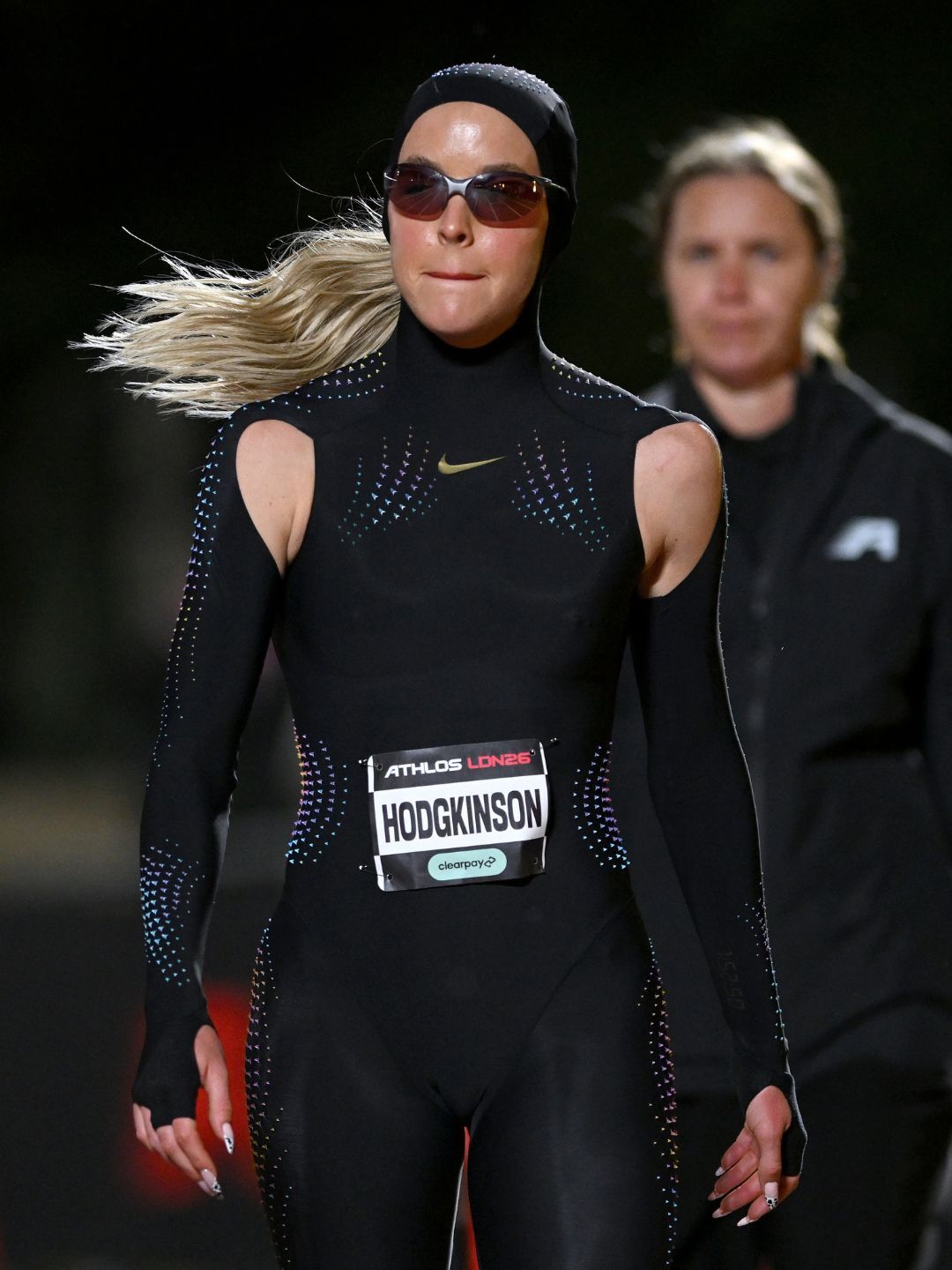
By now, you'll all have seen the viral images of Keeley Hodgkinson at last month's ATHLOS event.
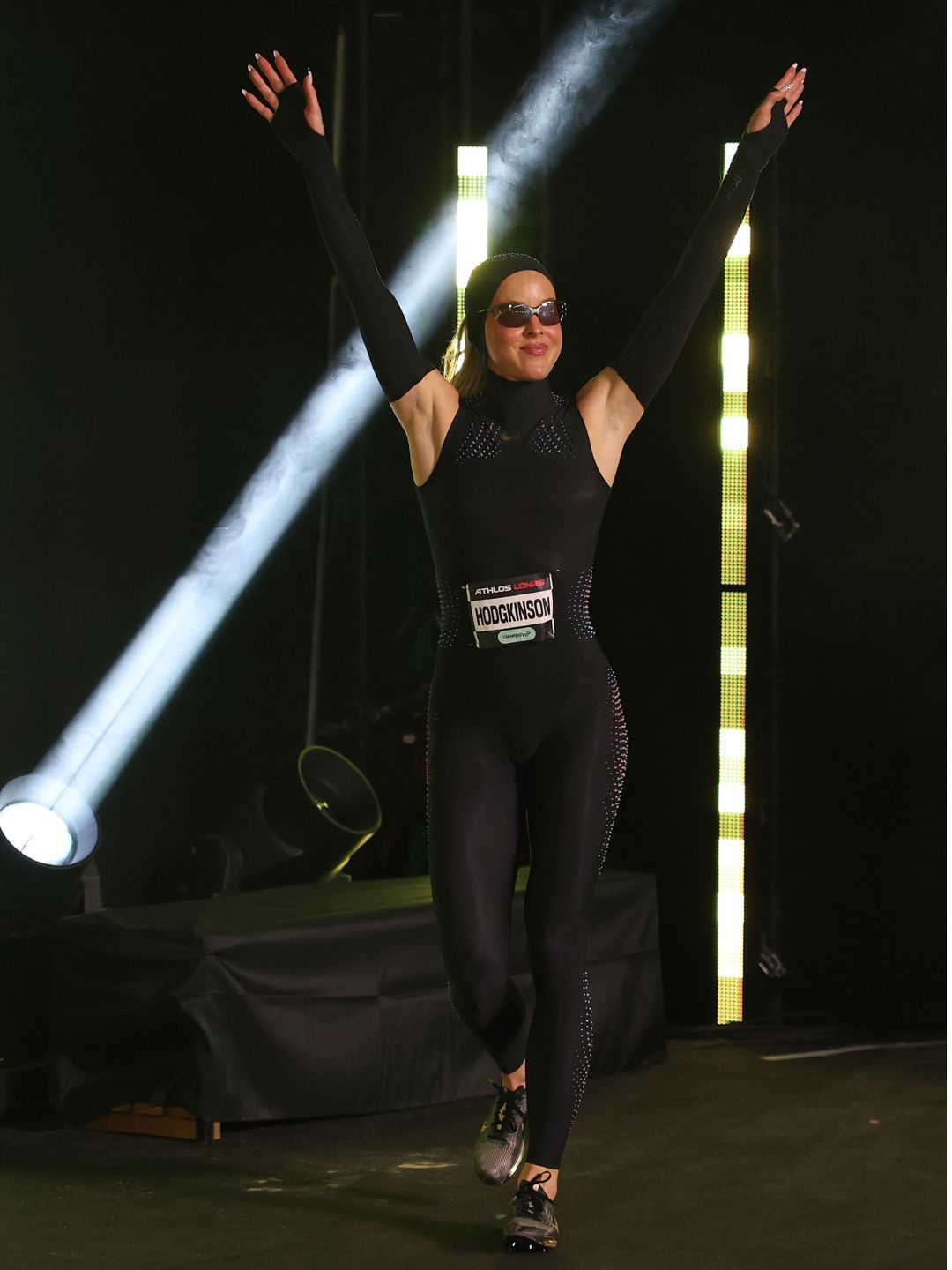
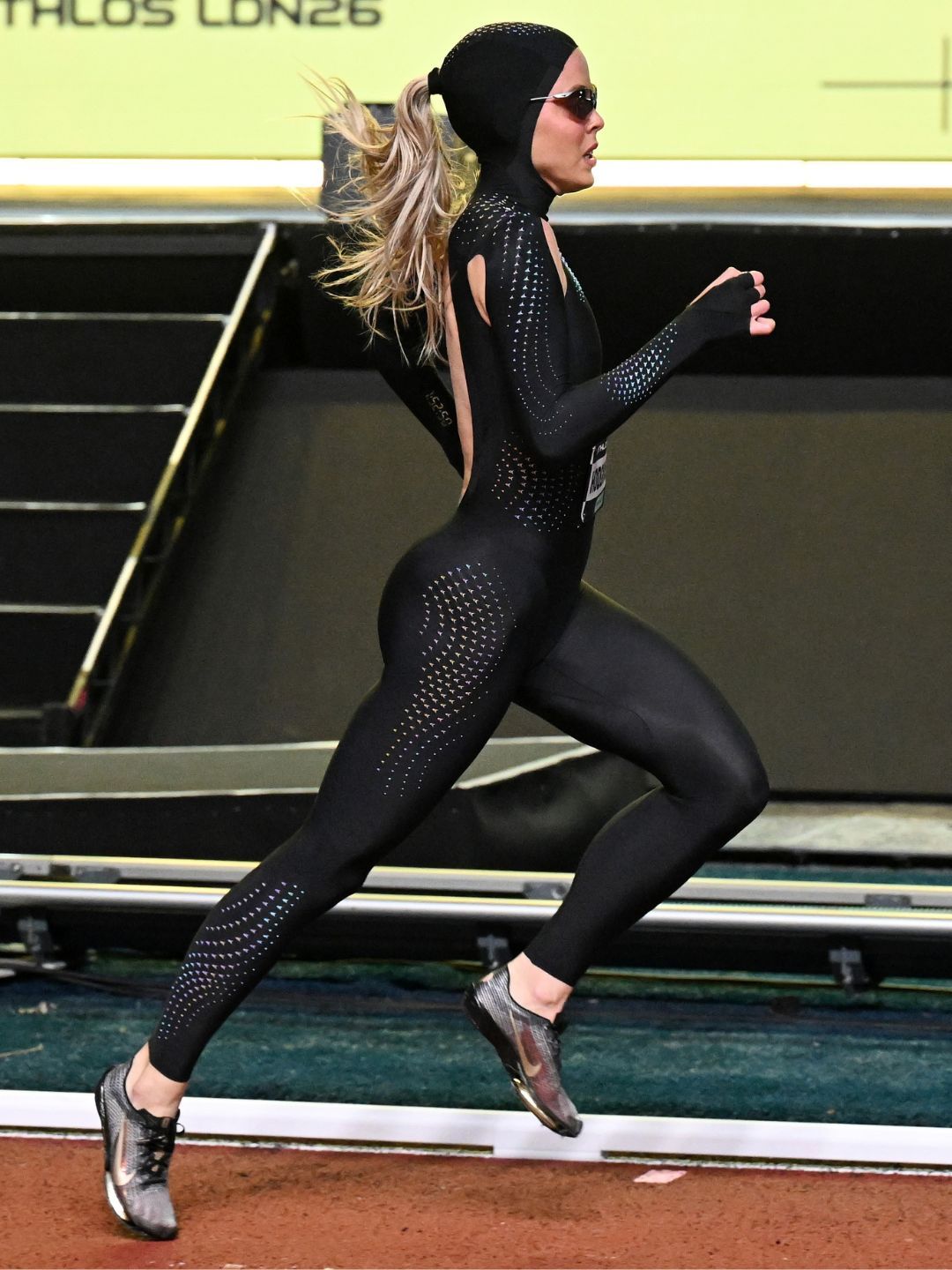
The British middle distance runner, who set the world indoor 800m record with a time of 1:54.87 in February, rocked up the first-of-its-kind women-only athletics event in a one-of-one, full-body Nike speed suit, designed specifically to help the athlete improve aerodynamics and reduce drag (and, fun fact: the suit had actually been developed over more than a year, including body scanning and testing across different environments).
But, beyond that, is was designed to capture attention, to pay homage to some of the athletic greats of the past, and to show women everywhere that wearing a badass outfit for big moments is part of the performance. It was a statement as much as a stylistic choice, encouraging women everywhere to be unapologetically bold, both on the track and beyond.
As the co-founder of a brand built around making women feel their best, I loved it. If we haven’t met before, I’m Megan Davies, co-founder of aesene—a women's athletic brand and community that’s been shaking up the space since we launched last year.
My sister Lucy and I have long been passionate about designing workout clothes that look good and, in turn, make you feel good—we're firm believers that wearing clothes that boost confidence changes the way you move and exercise.
It’s not that a good outfit is suddenly going to make you fitter or stronger, but if you feel comfortable, supported and confident, you’re able to focus on the actual session rather than being distracted by what you’re wearing.
What You Wear Can Change How You Train
I really believe what you wear can change how you show up to train.
For me, when something fits properly and I feel good in it, I move more freely. I’m not pulling at a waistband, adjusting a bra or thinking about how my body looks from a certain angle. All of that mental noise disappears, and you can get on with training.
There's a psychological connection between feeling confident in your workout clothes and feeling more motivated to move your body. If putting on your kit makes you feel good, capable and ready to move, it removes one of the barriers between thinking about exercising and actually doing it.
Confidence also affects the type of movement you’re willing to do. You might be more comfortable walking into a gym, trying a new class, running somewhere busy or lifting weights in front of other people if you aren’t already worrying about your appearance.
Putting Your Attention on Your Performance
I've personally noticed a difference in the way I train and carry myself when I feel genuinely good in what I’m wearing.
I’ve worn functional kit before that technically did everything it needed to do, but I didn’t feel good in it. Suddenly I was thinking about parts of my body I would never normally worry about and becoming really self-conscious.
That is the last thing you want before an important session or race. You already have enough going through your head without worrying about how you look.
When I genuinely love what I’m wearing, I feel more confident, and I carry myself differently. I’m able to put my attention where it should be, on my performance and what my body is capable of doing.
It's massively important that activewear works with the body rather than making you feel like you have to change your body to fit the clothes, and it’s something we think about constantly with aesene.
Performance and aesthetics shouldn’t have to compete with one another
Megan Davies, co-founder of aesene
The clothes should adapt to your body, not the other way around. You shouldn't feel that you need a different stomach, smaller hips or a particular body type to look right in performance kit.
We design for movement first, but we also care about how a garment makes someone feel when they put it on.
Performance and aesthetics shouldn’t have to compete with one another. Women are allowed to want technically excellent products and still feel really good in them.
Performance, Identity and Confidence Coming Together
A 2025 study of 279 women looking at their experiences in gym environments found recurring themes around feeling judged, feeling “on display”, self-criticism and clothing challenges. The same study also found that gym spaces could be empowering when women felt more comfortable within them.
Keely’s Nike kit for Athlos became part of the conversation around how athletes present themselves and perform. I loved that moment because it showed that performance and personal expression don’t need to be separate.
At that level, competition kit obviously has a physical job to do. It needs to work aerodynamically, regulate temperature, move properly and never become a distraction.
But psychologically, I think there’s another layer. When an athlete walks onto a track feeling powerful, distinctive and completely themselves, that can contribute to how they carry themselves.
Keely herself described the suit as “pretty sick”, and she went on to win the 800m at ATHLOS in 1:56.40.
You can’t say the outfit caused the performance, but it created a moment where performance, identity and confidence all came together.
Keely’s ATHLOS suit showed that performance and personal expression don’t need to be separate
Megan Davies, co-founder of aesene
The best visual moments in sport aren’t memorable because they feel like publicity stunts. They last because there’s authenticity behind them.
Keely’s outfit worked because it still felt like an athlete making a performance decision, just with much more personality and creative direction than we’re used to seeing.
It also referenced iconic sporting imagery, including Cathy Freeman’s Sydney 2000 suit, while still feeling completely contemporary.
Sport creates some of the most memorable fashion imagery because there’s something real happening underneath it. The athlete isn’t just posing in the clothes; they’re actually performing in them.
That combination of function, character and a genuinely significant sporting moment is what gives an image longevity.
The Link Between Body Confidence and Physical Confidence
Body confidence and physical confidence are much more connected than we sometimes admit.
When we started aesene, one of the things we felt was missing was performance clothing that didn’t force women to choose between feeling athletic and feeling like themselves.
We’ve learned through fittings, feedback and our community that tiny design decisions can have a huge impact on confidence. Where a waistband sits, how a short cuts across the leg, where seams fall, how secure a bra feels, and whether a fabric clings when you sweat might sound purely aesthetic, but they affect whether someone is thinking about their body or their training.
The goal for us has always been that once you put the clothes on, you stop thinking about them.
If we started viewing workout clothes as tools that help us move better, it would make exercise feel much more inclusive
If we stopped thinking about workout clothes as something we wear to "look the part" and instead saw them as tools that help us move better, it would make exercise feel much more inclusive.
Instead of thinking “do I look like someone who belongs in this gym?” or “do I have the right body to wear this?”, the question becomes “does this help me move, does it make me comfortable, and does it make me want to be active?”
We don't need to dismiss aesthetics to get there. Feeling good in something can be part of its function.
The best performance clothing should support your body physically, remove distractions mentally and give you the confidence to focus on what your body can actually do.
That shift from appearance to capability is something that could make movement feel much more positive for a lot of women.





0 Commentaires