“We would love to invite Felicity to our London Fashion Week show; dressing will be provided.”
An email that once felt like a golden ticket into an industry that had so often shunned plus-size models quickly became: “We’ll send a selection of earrings and accessories.”
That was the moment, in 2019, I decided I wouldn’t attend another show that wasn’t size inclusive.
Too often, the plus-size community are expected to feel lucky simply to be included. But trust me when I say, there is nothing ‘lucky’ about being invited somewhere and then being told there is nothing for your body to wear, particularly when the plus-size market is estimated to be worth £10 billion in the UK alone.
Every season we have a new conversation about diversity and inclusion, but quite frankly I’ve stopped listening to the empty promises and started vigorously looking at the numbers.
For the past four years I’ve tracked curve representation across New York, London, Milan and Paris, looking at who is creating space for the curve community and, more importantly, who is disappearing and cutting ties.
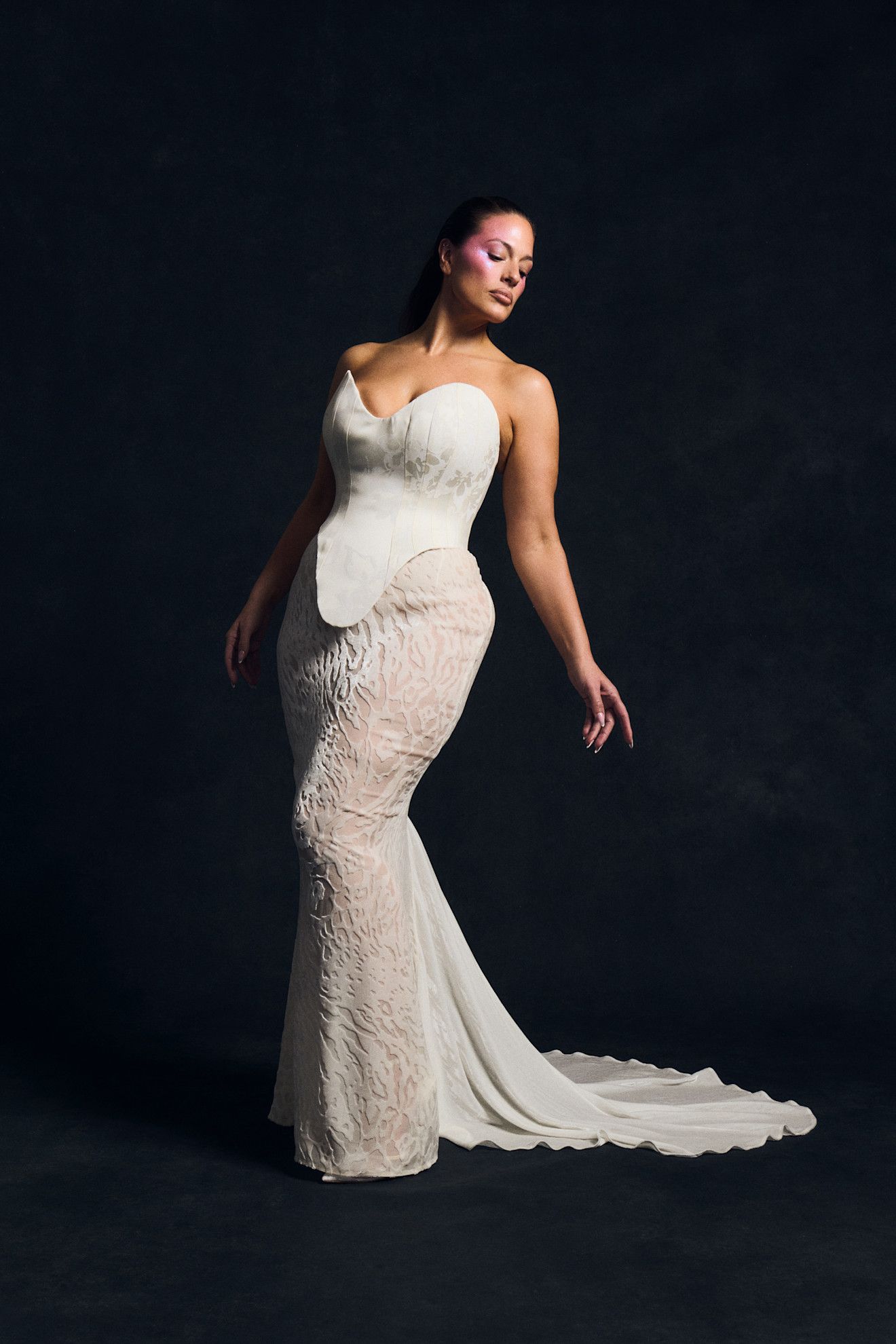
Having one curve model appearing on a runway when size diversity is having a cultural moment isn’t a meaningful change, it’s cosplaying as inclusion. We really need to stop allowing the industry to keep using our bodies as a ‘trend’, we’ve gone from witnessing models put on weight half way through the 2010s to when body positivity was at its peak, to the middle of the 2020s when 90’s heroin chic has sadly made a comeback, with smaller models taking easily available weight loss medication to become extremely worryingly underweight.
I also don’t believe the responsibility of making fashion more inclusive should continue to fall on the shoulders of the few independent designers willing to do it.
Why are the brands with the biggest budgets, the largest teams and the most resources so often the ones allowing smaller labels to lead the way?
These emerging designers are the ones investing in broader sizing and taking the commercial risk of proving that there is a demand for it.
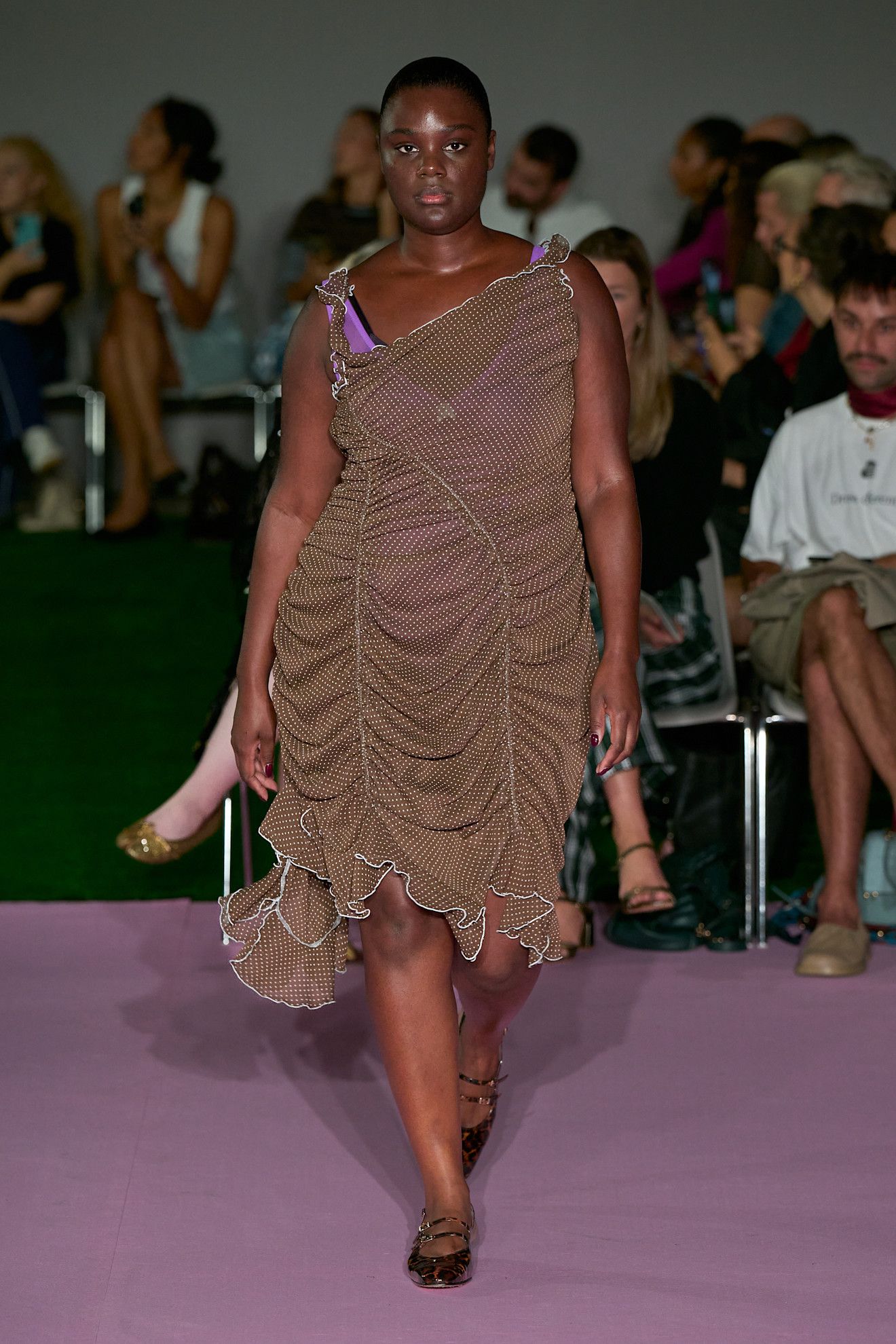
At some point, the question has to be, if smaller brands can find a way to make inclusivity work, what exactly is stopping the fashion houses with considerably more resources from doing the same?
So, let’s take a look at the numbers from this season, because there has been significant change across all four cities. I’ll let you find out if it’s been positive or disappointing below.
New York
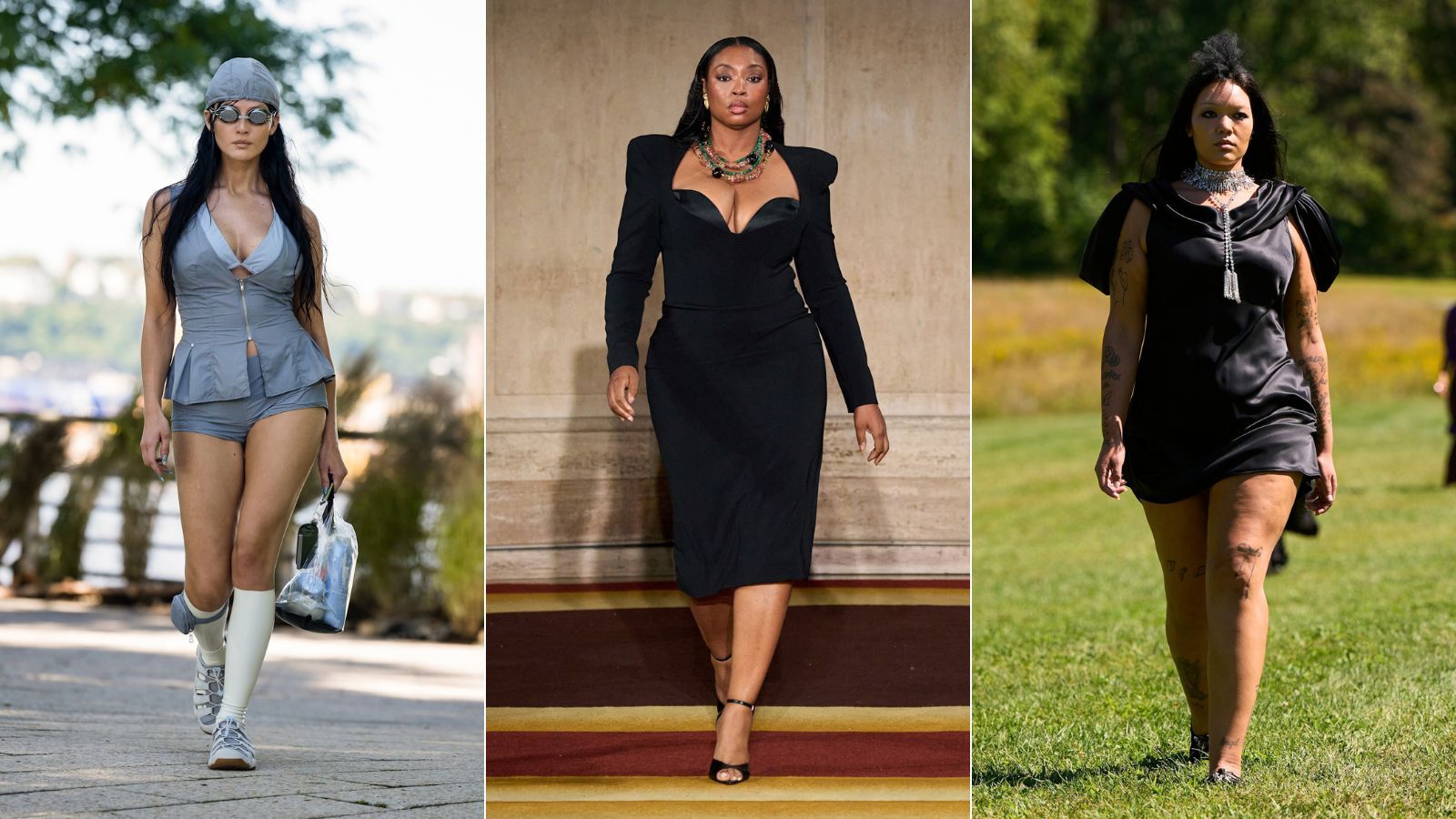
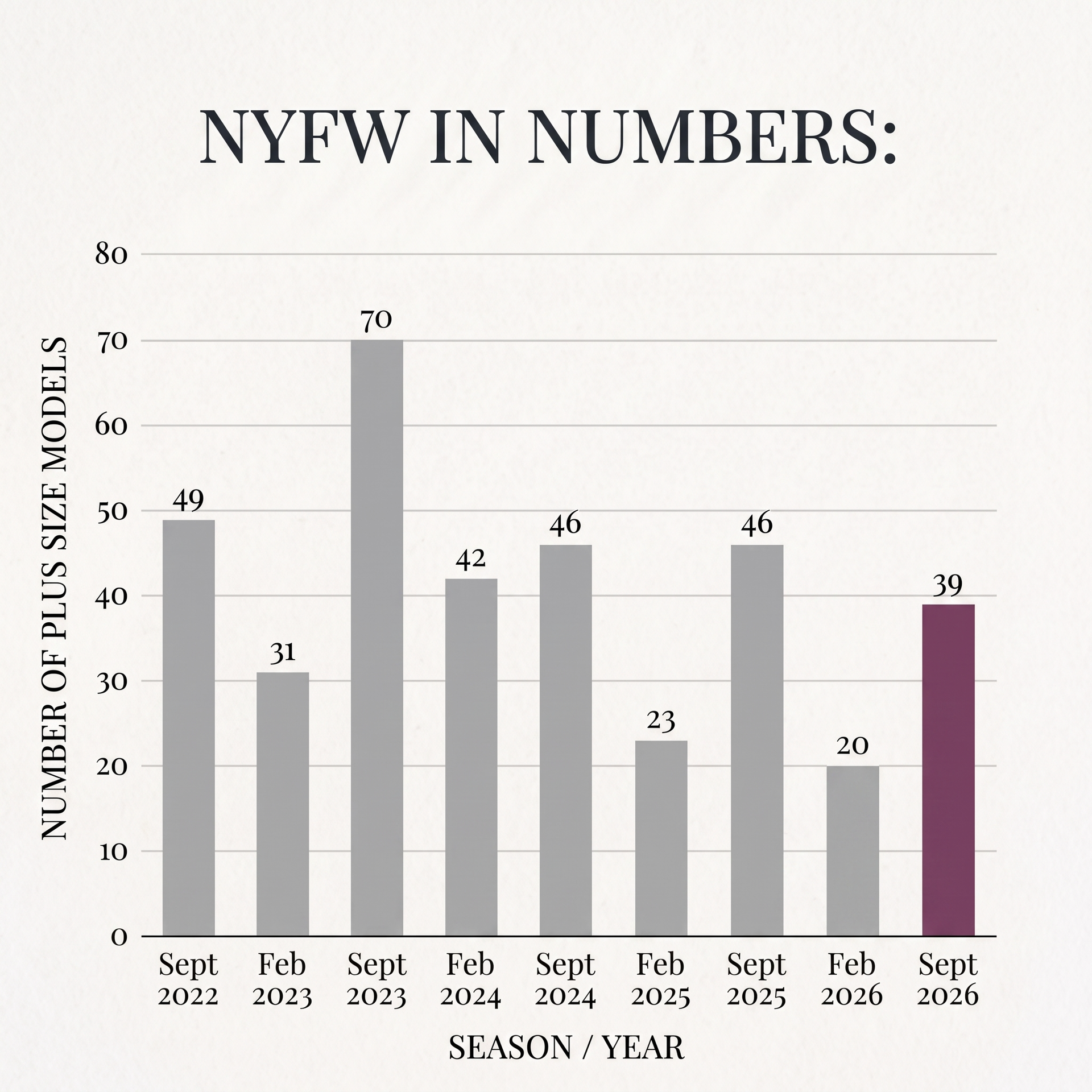
With over 103 designers showing this season and an average of 35 looks per show, there were around 3,605 looks on the runways.
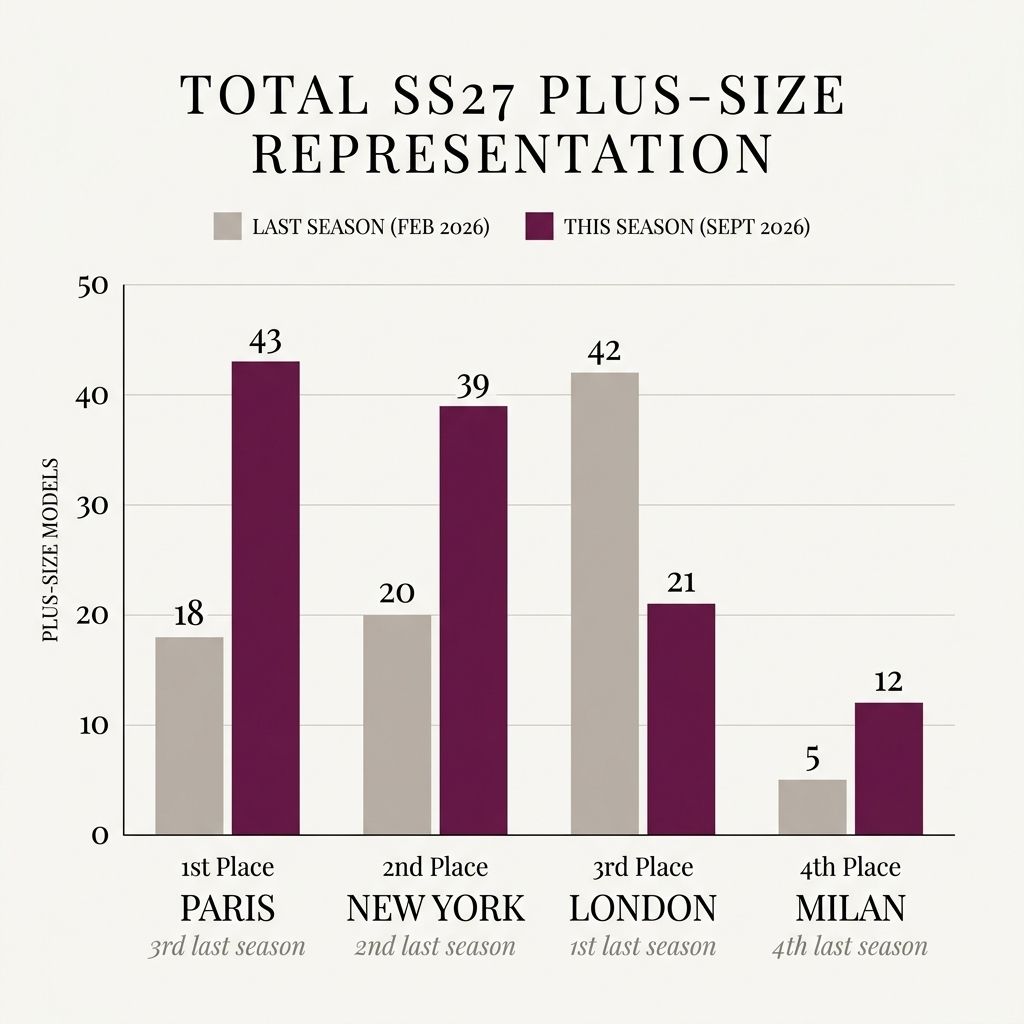
Of those, 39 were considered curve or plus. That is a nearly 50% increase from last season. Although we are nowhere near the top stats of 2023, it is nice to see a balance back in the big apple after last season’s poor attendance.
The designer who loyally flies the flag for representation season after season is Christian Siriano, who cast seven plus-size girls on his runway this season. Not to mention there was also a plethora of off-schedule shows fully embracing the plus size movement. We just need the big fashion houses to step up, too.
London
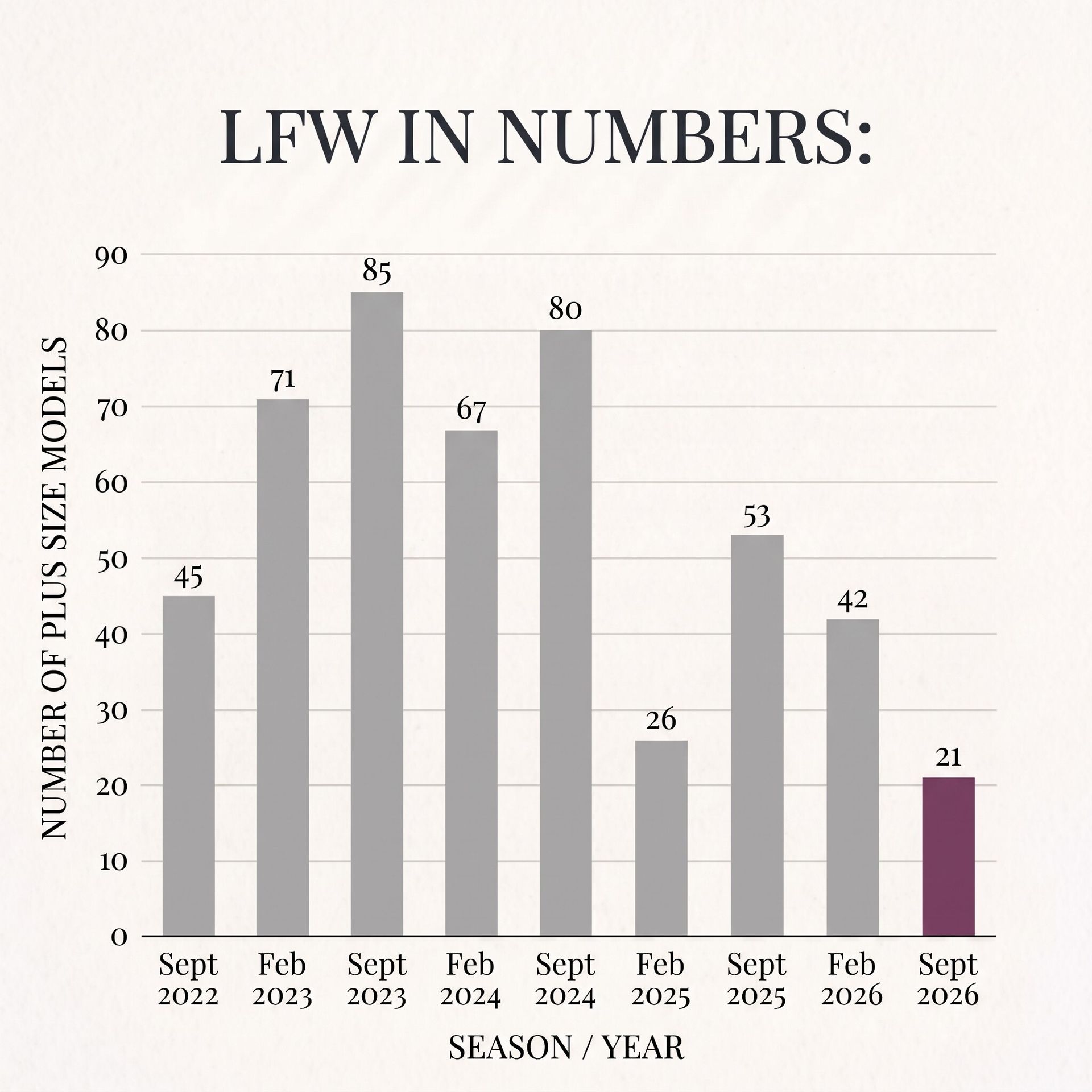
Over 50 designers showed in London this season and with an average of 32 looks per show, there were around 1,605 looks on the runways.
Only 21 of them were considered curve or plus.
Without the powerhouses that are Sinead O’Dwyer and Karoline Vitto this season perhaps it was no surprise London was down by 56.3% in size inclusion.
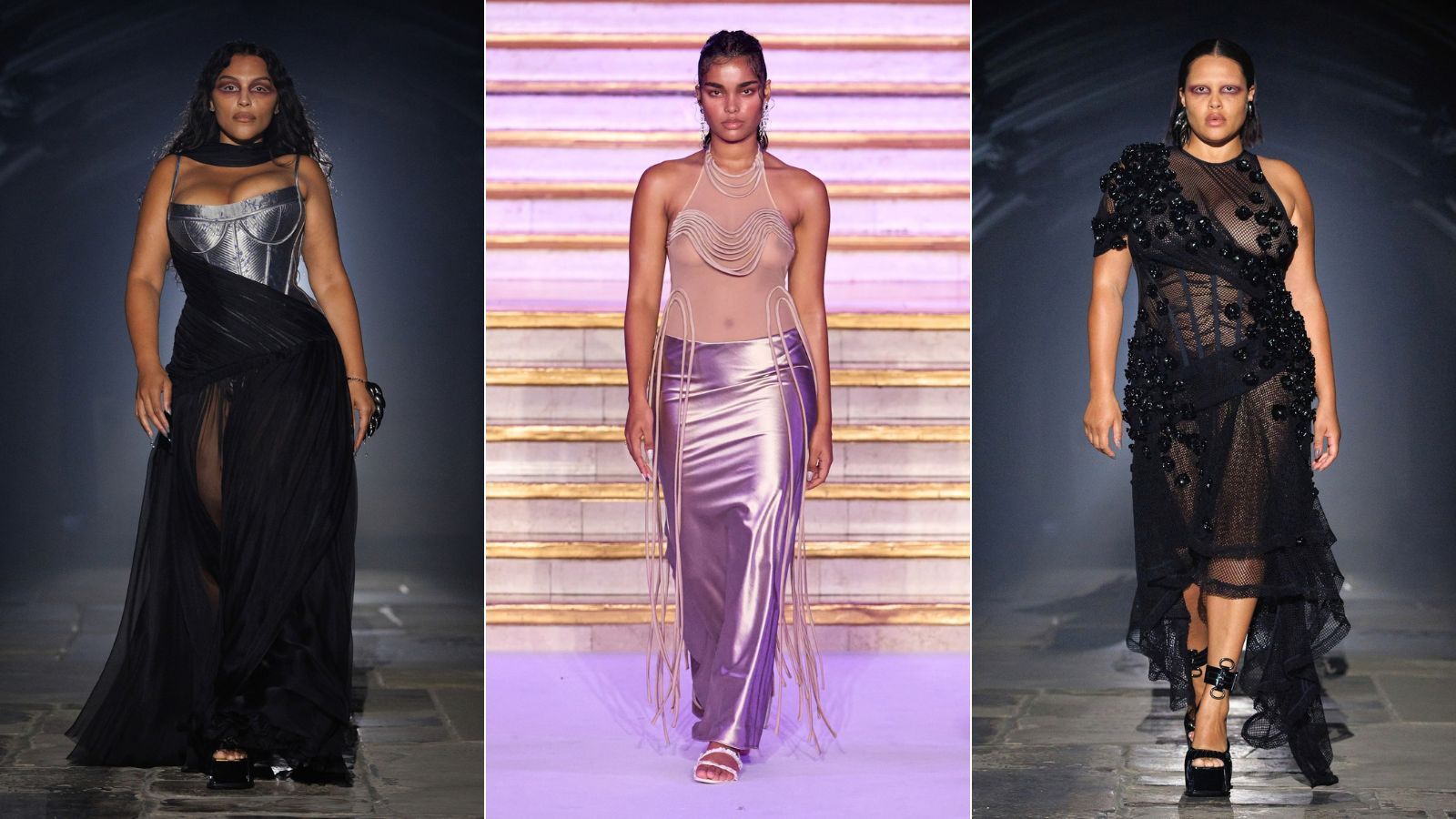
It was, once again, an independent designer, Di Petsa who held the torch for plus size in the big smoke, with five curve models.
What is happening in our city? This is the lowest London has been since the start of my report in 2019. It was also the first year I also got no LFW invites. It really feels like the UK has done a 180 and turned its back on us, not only in size inclusion on the runway, but in the front row seats, too. Plus-size bodies and voices are disappearing from these high-profile fashion moments and we must keep uplifting those who are advocating for change. We’ve all worked too hard to be erased.
Milan
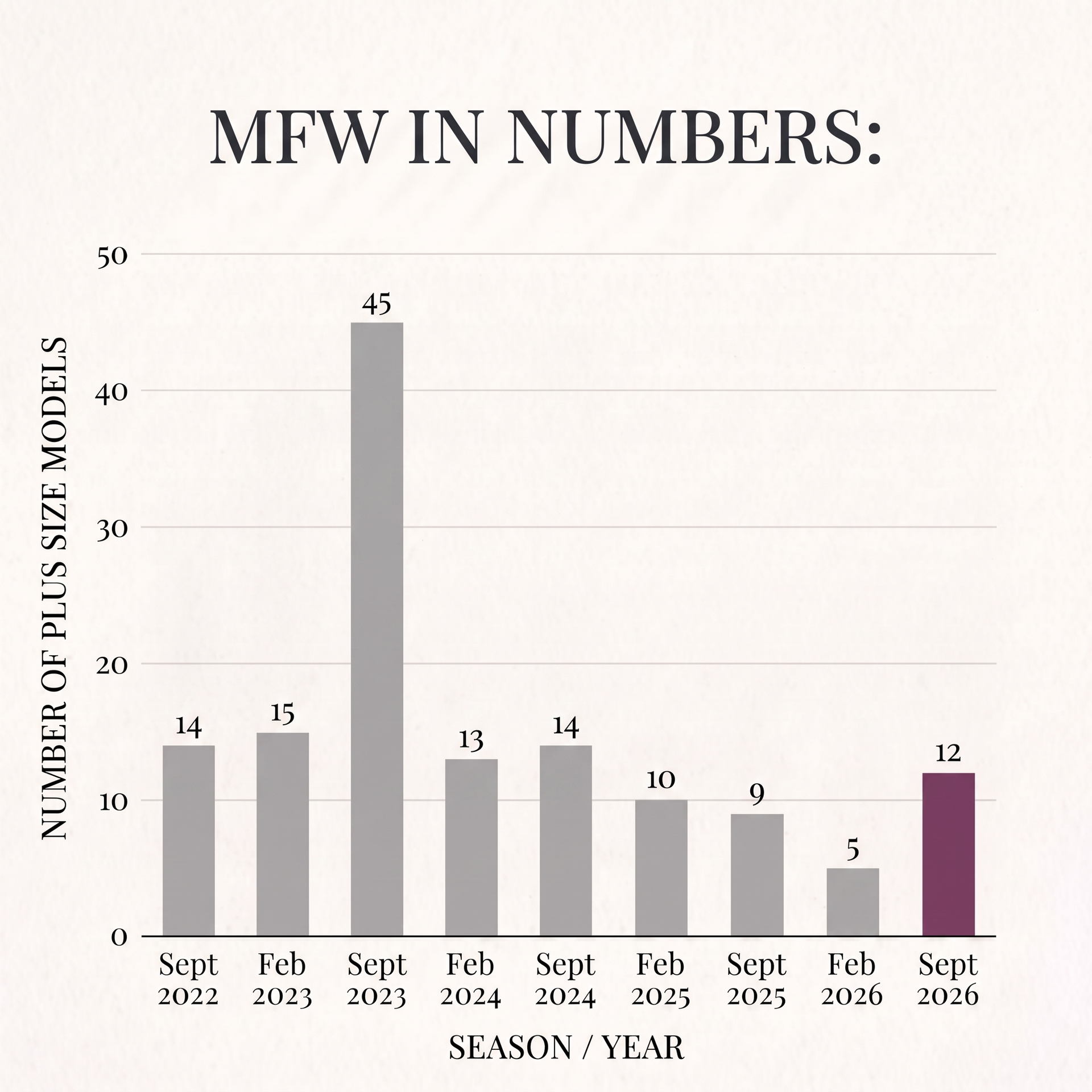
With over 56 designers showing this season and an average of 42 looks per show, there were around 2,350 looks on the runways. Twelve of them were considered curve or plus.
However, before we start to celebrate that Milan has more than doubled its inclusion this season, it’s important to note that seven out of 12 of those models were from the Vogue World show, which was hosted in Milan this year. A production which was funded by Eli Lilly, one of the world’s leading pharmaceutical companies specialising in weight-loss injections and pills.
A sponsor for a global fashion show, whose biggest product is Mounjaro, in an industry that is rife with eating disorders and body-image issues… that is who Vogue decided was the aligned partner for this show.
I personally don’t believe this increase is a win for Milan, because the added numbers only come with a toxic partnership.
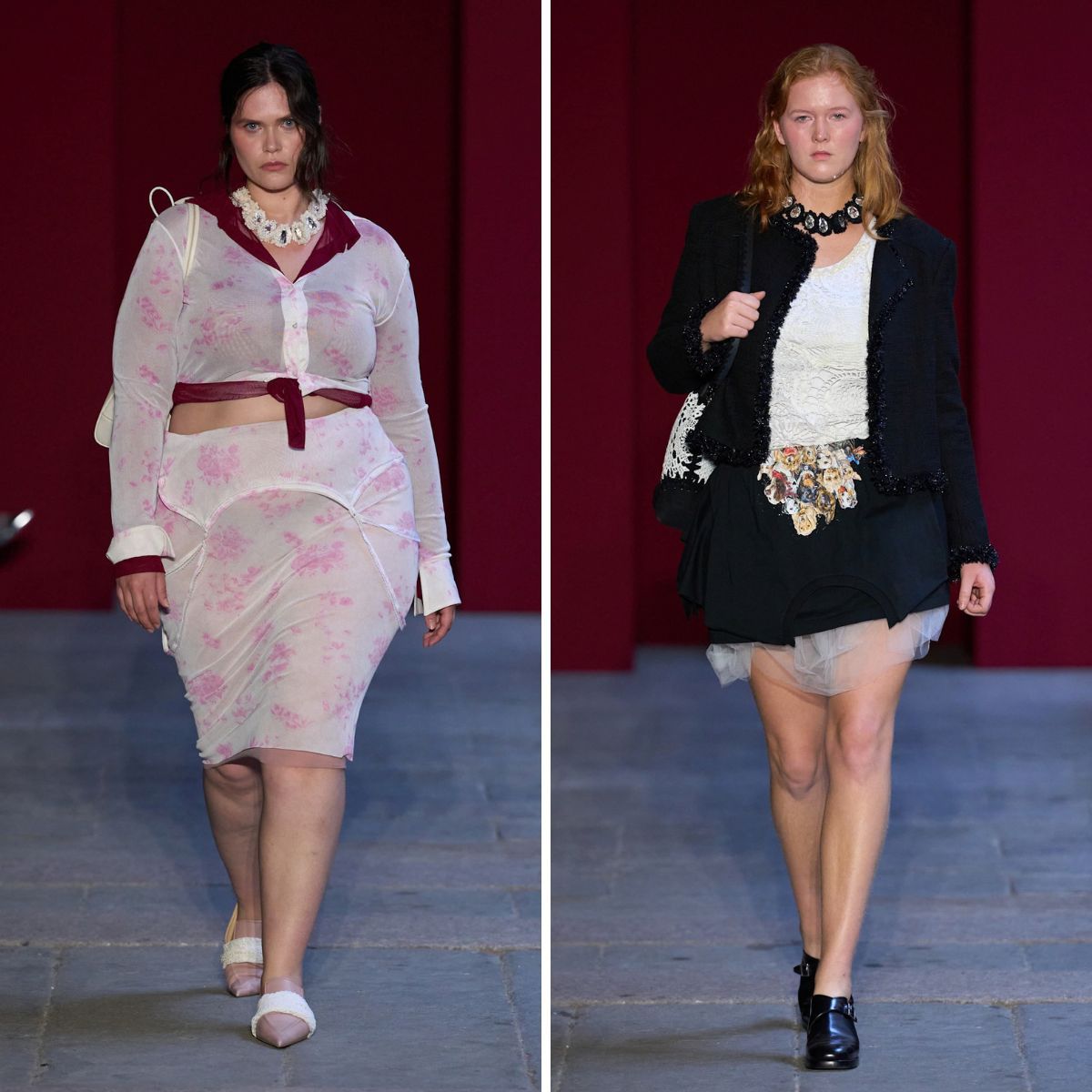
Marco Rambaldi has been the only designer consistently showing curve models in Milan for the last few years, with three curve models coming from his show this season.
Paris
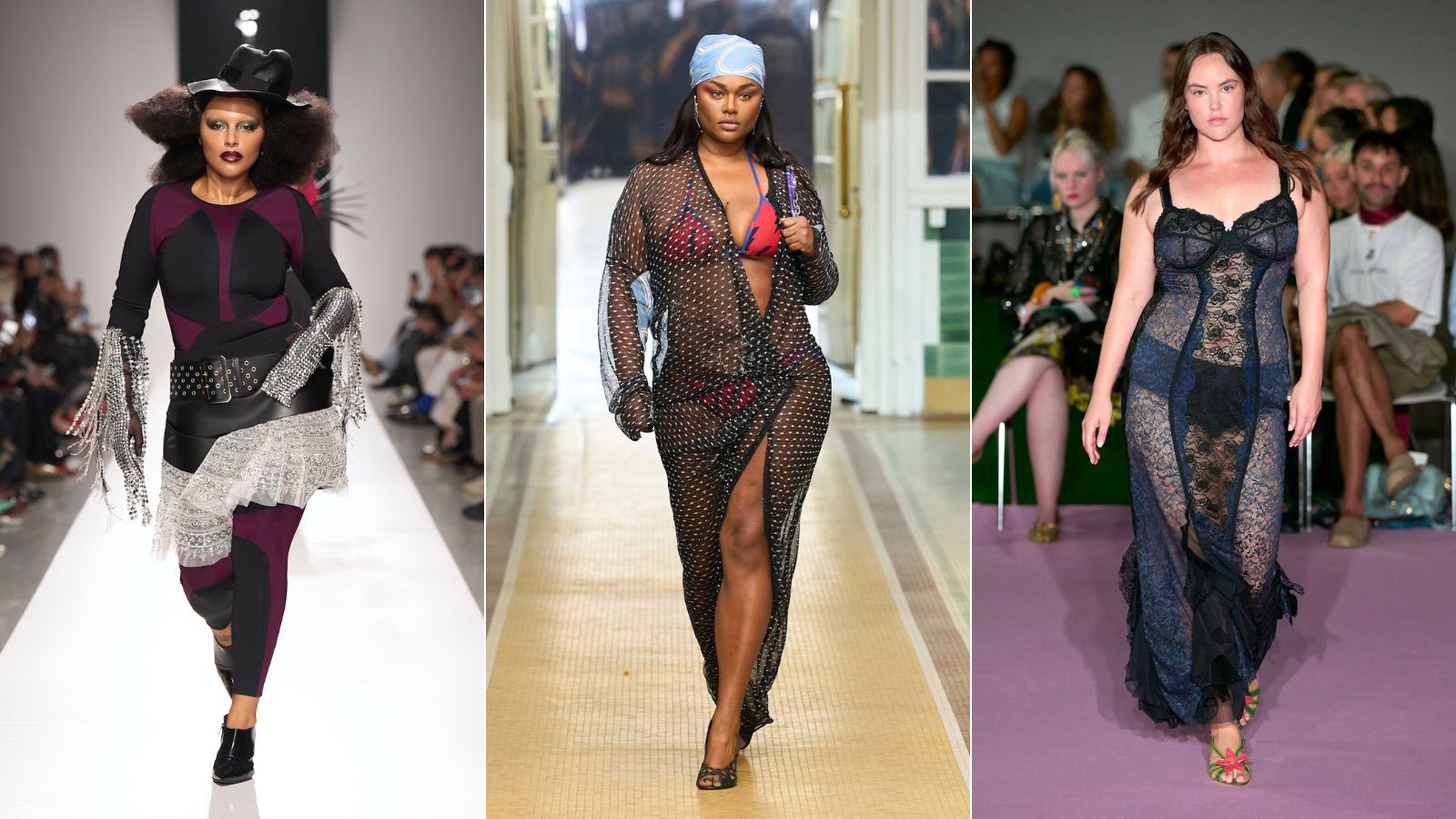
Paris is a busy city. With over 95 designers showing this season and an average of 42 looks per show, there were around 3,990 looks on the runways.
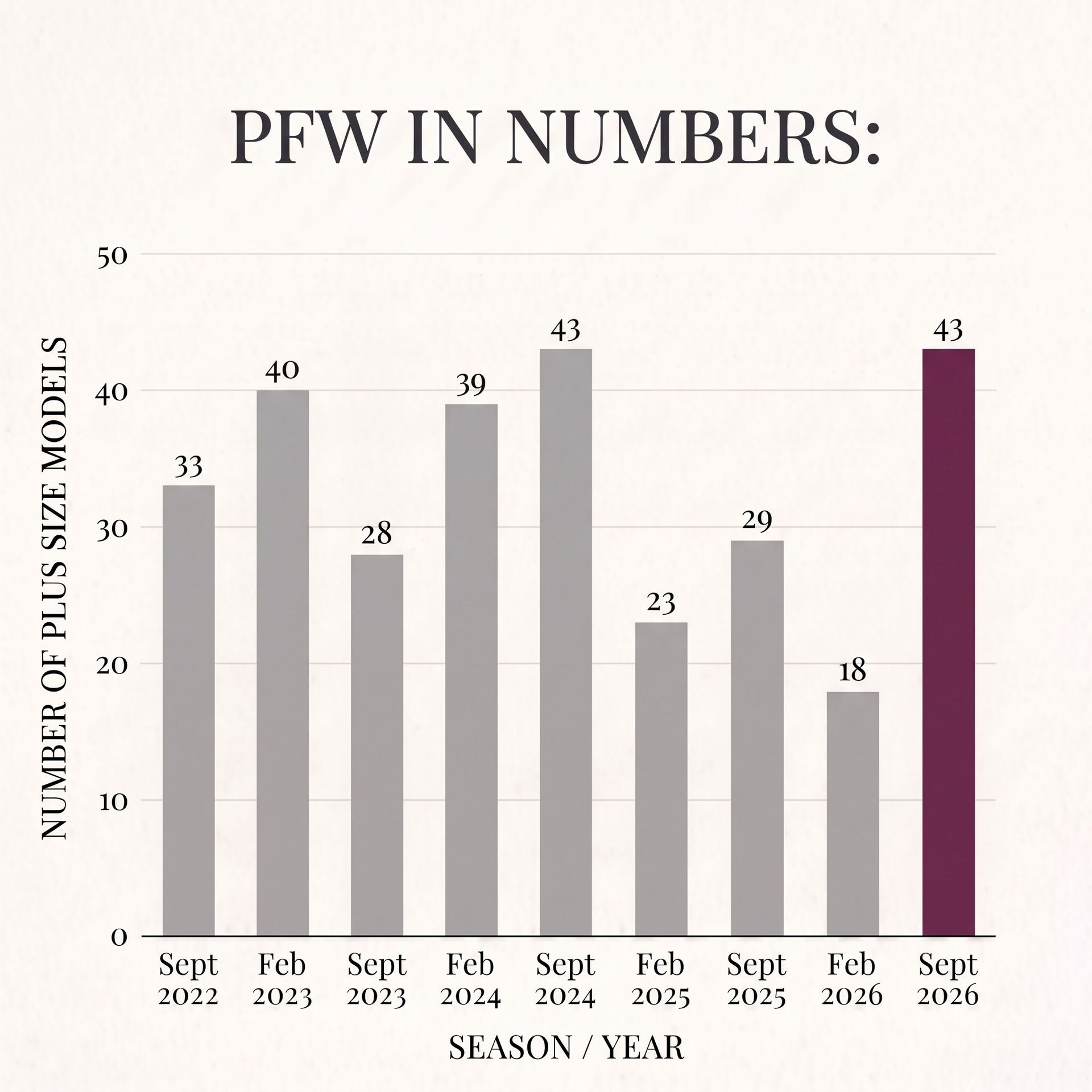
Of those, 43 were considered curve or plus. That is a 139% increase from last season.
The standout designer was Ester Manas with 16 curve models.
Rick Owens also brought back two plus-size models; I was starting to believe his SS25 inclusion of 16 plus-size models was a gimmick, so glad to see there was some curve this season.
It was also great to see Precious Lee for Andreas Kronthaler for Vivienne Westwood. Not to mention the first big and tall male models we’ve seen this season (and for the last couple of years) walked for Matières Fecale.
Total SS27 Plus-Size Representation
This is the first time Paris has been at the top and London has been third. As much as it is a huge win for Paris, they have only earned that title because London decreased its inclusivity by 56.3%.
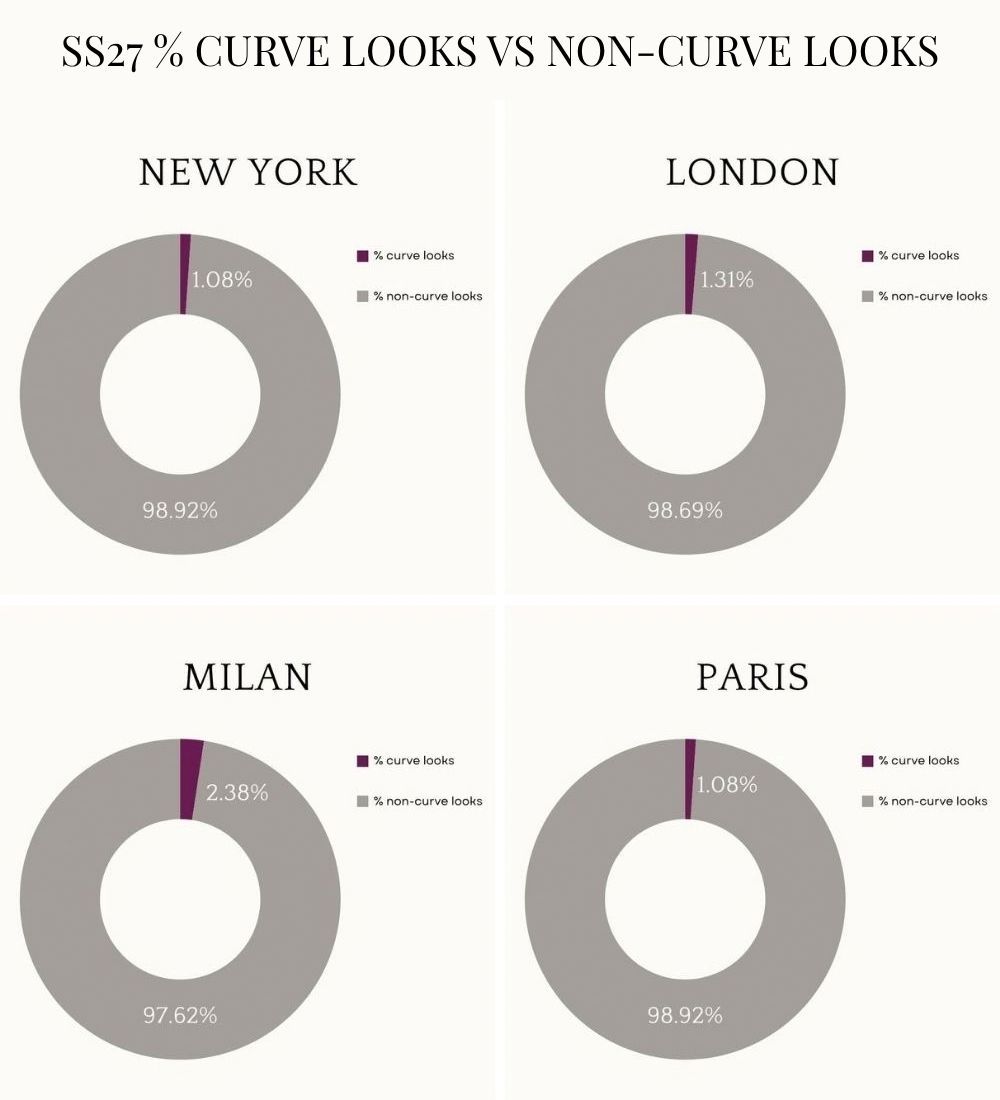
And there’s another caveat. When we look deeper into the insights from each city, the number of curve models as a percentage of total looks shown is pretty bleak.
Even though Milan is historically always the lowest in catwalk curve representation, the city’s percentage is actually higher, at 2.38%, than this season’s overall-number leader Paris, trailing with 1.08%.
I’ve always focused on number of looks as the primary metric, but with 41% of the global population considered plus size, to see that none of the cities are representing above 3% is a stark reminder of how much work the industry still needs to do.
The highest numbers we’ve ever seen for curve representation was in 2023 for New York, London and Paris. Right now we are at around 50% less of those stats.
I still believe the numbers should be higher, but in the current climate, where weight loss drugs are so easily available and the skinnytok agenda is being insidiously pushed, I sadly think will we just be yo-yoing numbers into the next body image trend.
Let's keep up the pressure and I’ll be back to keep fashion accountable and report on any progress – or otherwise – at the February 2027 shows.





0 Commentaires