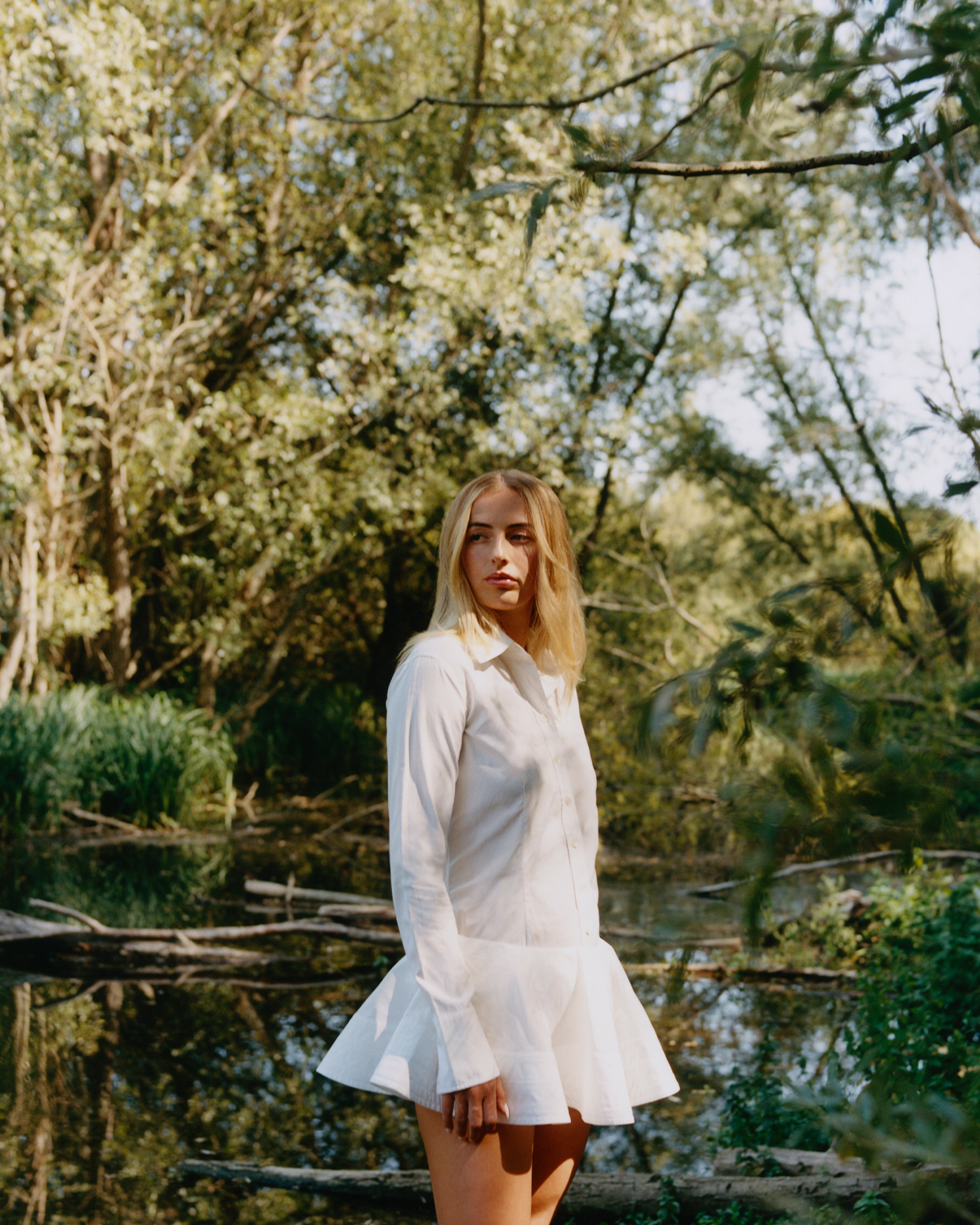
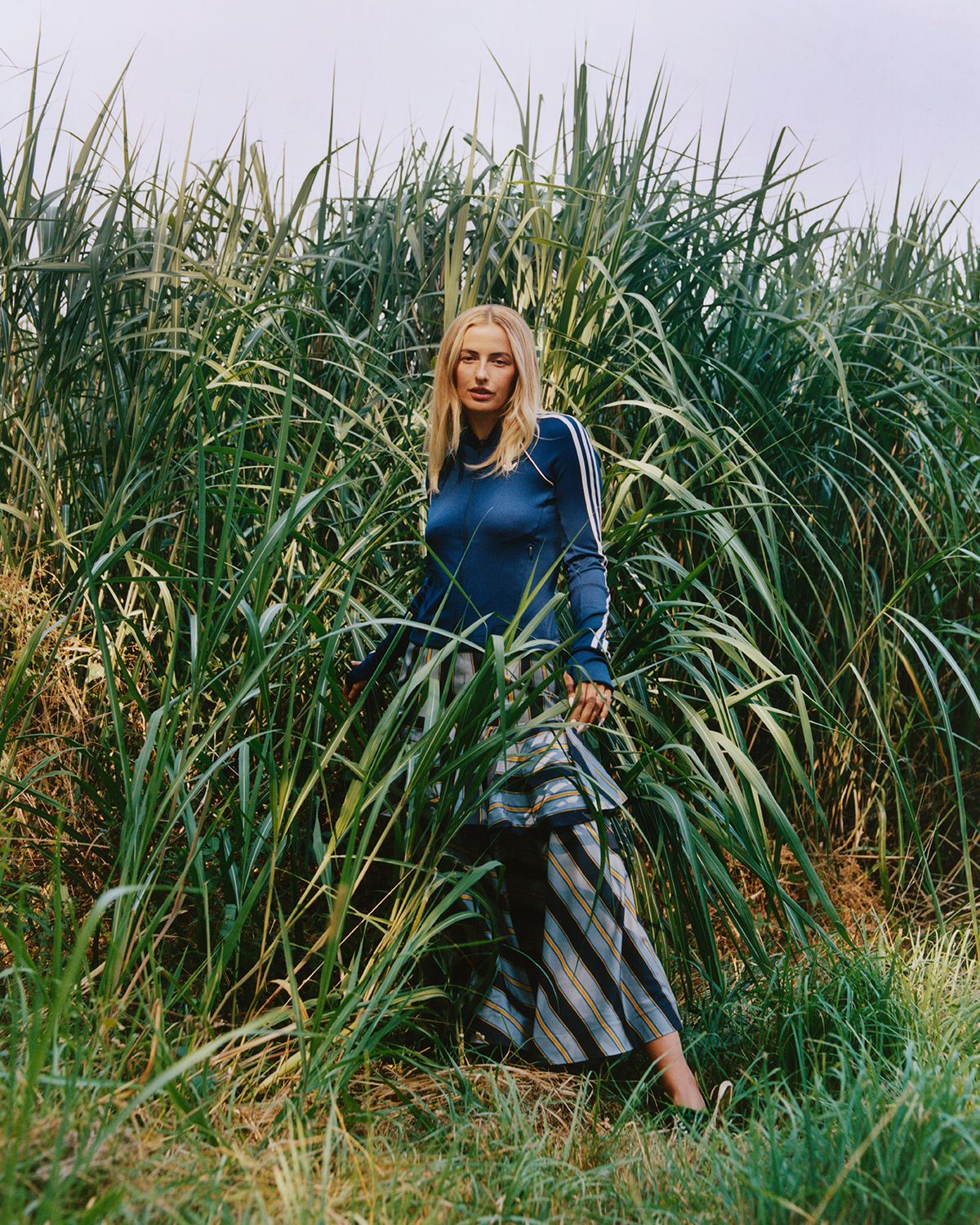
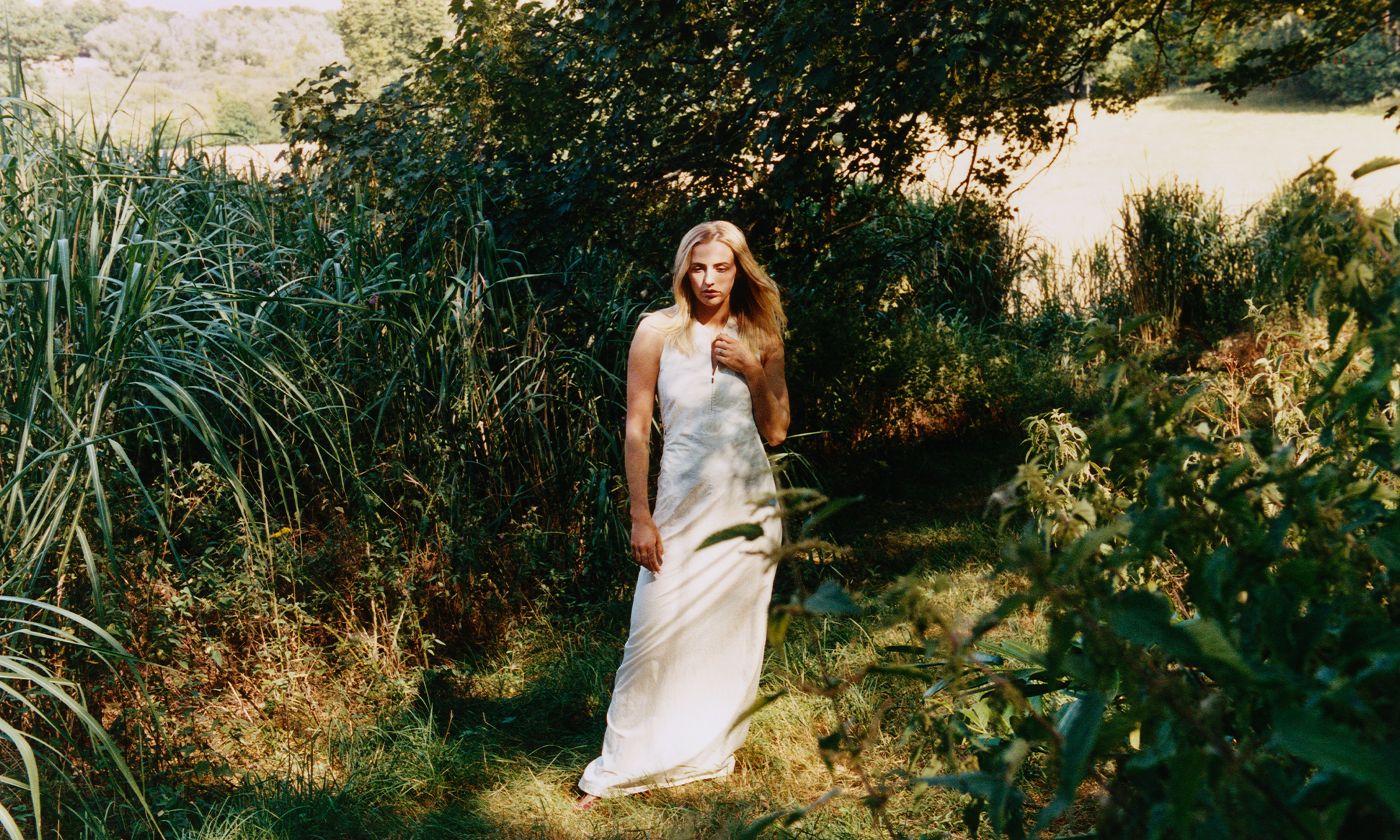
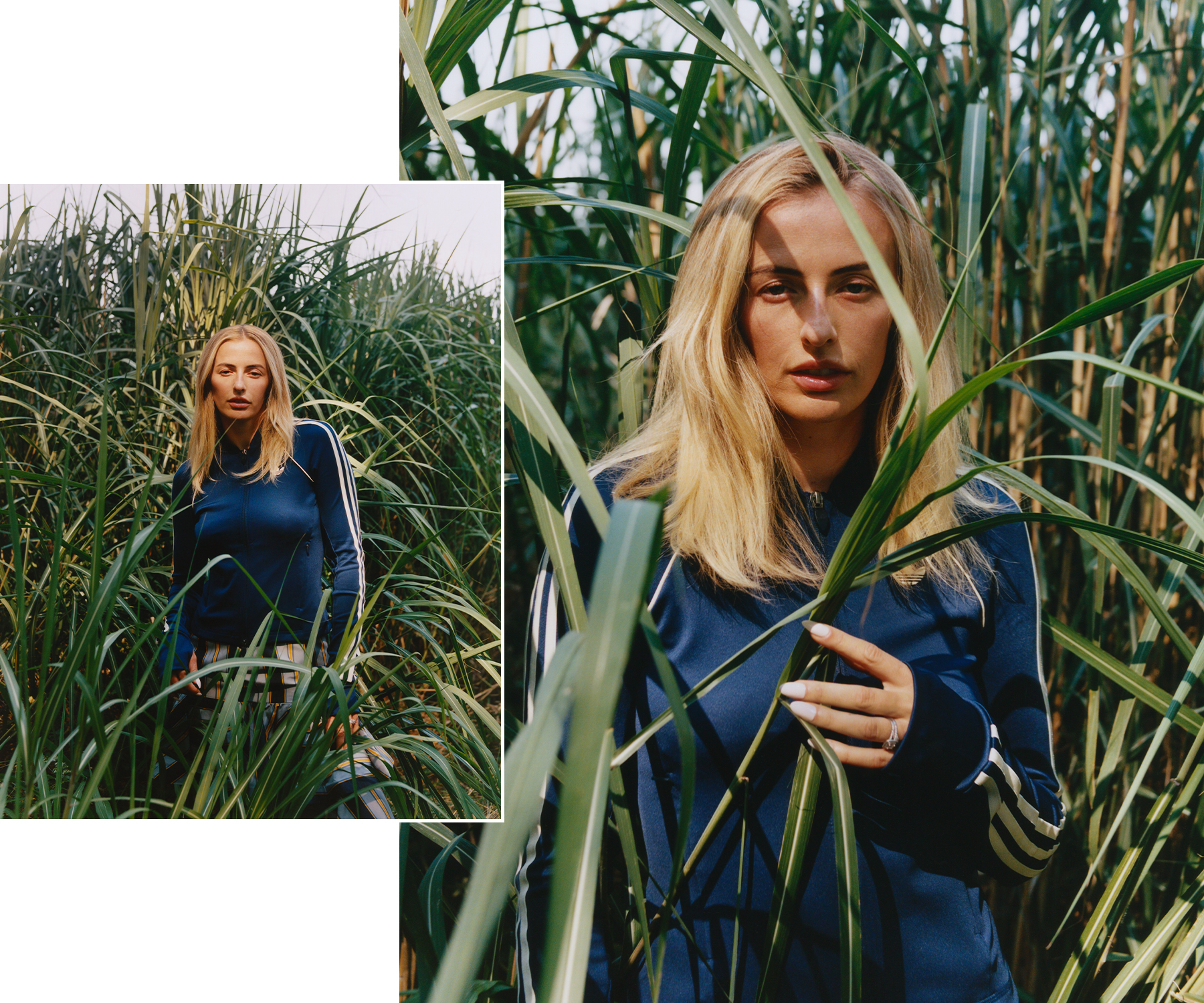
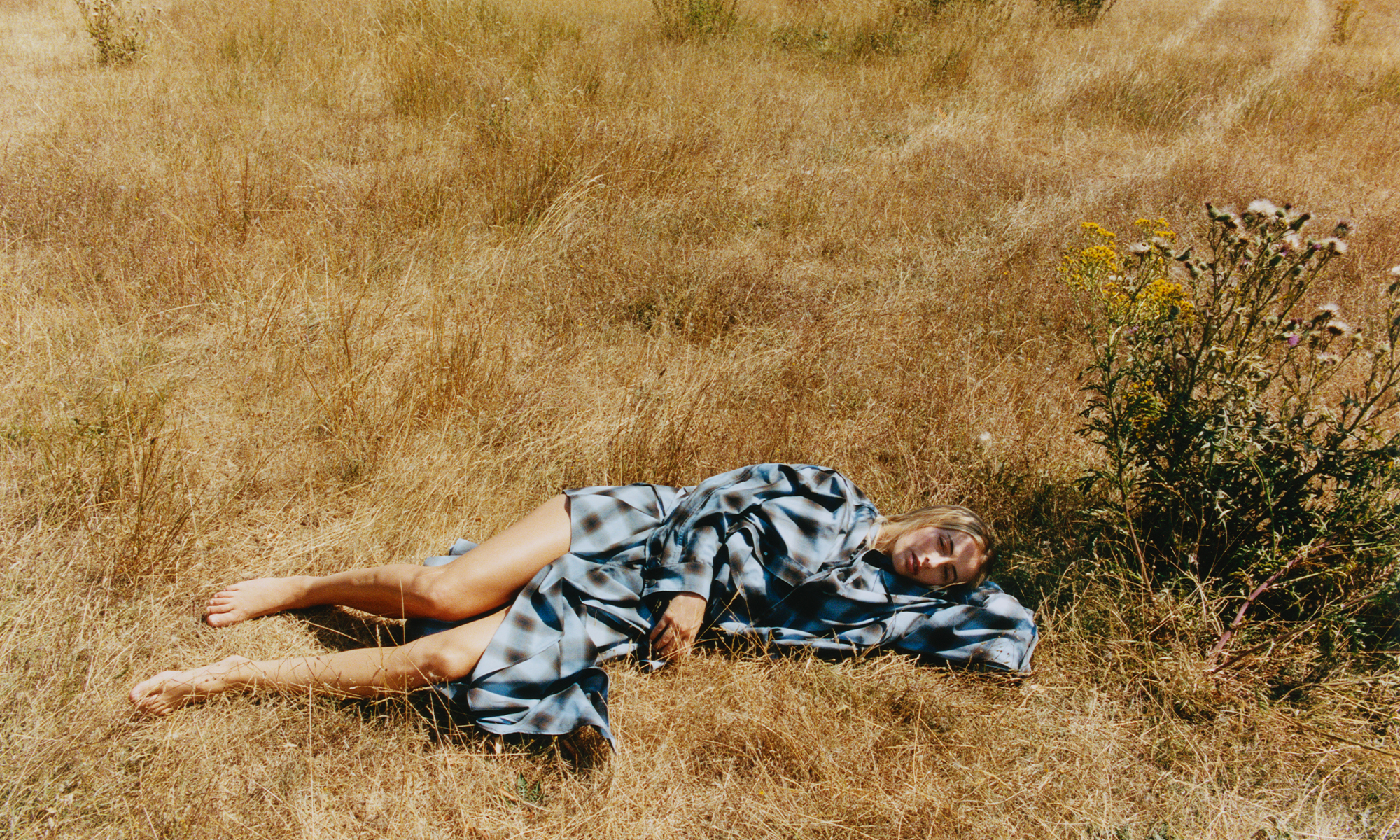
For our sixth Women in Sport cover shoot, we’re on location at a remote farm in Buckinghamshire. The temperatures are practically Mediterranean, but the heat doesn’t seem to faze Lioness, trailblazer and global icon Chloe Kelly, who shot to fame after scoring the winning goal in the 2022 Euros final. She arrives on set with her three cavapoochons, Otis, Rolo and Brody, raving about an acai bowl she had for breakfast (with Nutella on top, of course; she’s on record as being a huge fan) and—having recently signed with the brand for a reported seven figures—wearing head-to-toe adidas.
As a lifelong Arsenal supporter and Lionesses admirer, it’s hard not to fangirl. I was in the stands for her Euros 2022 winning goal against Germany, which brought glory to the nation for the first time in 56 years. I was in a pub in Euston when she scored the winning Euros penalty last year, cementing England’s first ever double-Euro victory. And I was in the crowd at this year’s Arsenal parade, where the screams for the women’s team were as loud (if not louder) than the men’s.
I’ll never forget her waving her shirt around her head in victory during that 2022 final—a cultural moment that embodied freedom, strength, and unbridled joy. It became a symbol for something much bigger, resonating with women globally and reminding us not only of how strong we are, but what we can achieve. That celebration, alongside the unprecedented win, cemented women’s football as a mainstay and changed the course of history forever.
But for Kelly, it was just another day at the office. “Being at Wembley and winning a major tournament that I’d dreamt of as a young girl was surreal. But then you’re back to reality,” she laughs. “It was all over in a flash—I honestly can’t remember much about it.”
What she does remember is the amazing group of teammates she played alongside, the shift it instigated for growth of the sport, and the post-match celebrations—her favourite being a street party with her parents’ neighbours on the estate she grew up on in West London. “It was really nice to go home, show my medal and celebrate with those people, because actually, they’re the ones that made this moment. When I was young, they allowed me into that cage or pushed me to be better. You learn about yourself in those moments, you know?”
The cage she’s referring to is the enclosed football pitch on Windmill Park Estate in Southall where she spent her formative years playing with her five older brothers (Kelly is the youngest child of seven). She smiles as she admits that most of her happiest childhood memories centre around that cage. “We’d play late at night or early in the morning; whenever we could,” she recalls. “I was the only girl there, which I felt very comfortable with, because they made me feel like I belonged there.”
She also acknowledges how lucky she was to have had that—both having the cage there on the estate and being given access to it—when she knows lots of other young girls still aren’t given that today. “Not having to pay to play sport is something that should be for everyone,” she says. “But I understand that many girls wouldn’t be able to go into that environment and feel comfortable. Thanks to my brothers, I was.” Normalising mixed workout groups and creating safe, welcoming sports spaces for all genders is a change she’d love to see.
To picture a younger Kelly kicking a ball around a council estate is almost hard to envisage now—as one of England’s best players, we’re more used to seeing her playing on pitches at the world’s best stadiums. Alongside scoring several of England’s winning Euro goals in 2022 and 2025, Kelly was ranked fifth in the Ballon d’Or Féminin last year (a season she called her best). Loved by football fans, she’s amassed a cult-like fanbase who praise her for being “clutch” under pressure (videos of Arsenal fans screaming her name went viral in May during the Champions League parade), while to millions of others globally—many of them less interested in the sport than they are in Kelly herself—she’s a role model, icon, and inspiration.
This wasn’t always the case. Kelly was something of a dark horse during the 2022 Euro tournament—she spent a lot of time away from competitive play after a near-year-long injury almost threatened her inclusion in the squad altogether. Her recovery was nothing short of miraculous, and a feat Kelly’s proud of to this day. “To be honest, I was a whole heap of emotions,” she says, looking back at that time. I was out for 11 months with my ACL. Looking at it now, for any player that’s going through that, I hope it can serve as inspiration.”
So much has shifted for women’s football—and Kelly personally—in the past few years, that ACL injury likely now feels like a lifetime ago. She got married in 2024; in 2025, she moved to Arsenal from Manchester City after four years at the club.
Her departure from City last year was dubbed by Sky Sports as “one of the most public and fraught transfers in WSL history”, and Kelly herself has been open about how tumultuous that period of time was for her, both mentally and physically—to the point that her hair started falling out. “I had alopecia, and I never really accepted that,” she admits. “I’d heard about it from people and TV, but when I started losing my hair, I was only 26, and I just thought to myself: ‘I play football because I love it, and now I don’t love it so much, my hair’s falling out.’ It wasn’t the football itself—it was the environment around me,” she reflects.
Another time, she says, her husband, Scott, had to pick her up off the bathroom floor after crippling anxiety and panic attacks left her constantly being sick. “That was the moment for me where I was like, ‘No, this isn’t normal.’ I accepted it as normal for too long.”
It’s hard to picture the footballer stressed, let alone this level of unwell. We’ve met on multiple occasions, and she’s always exuded calm, is constantly smiling, and has a soothing, easy-going presence. Kelly credits therapy, journalling, and a change of environment for rebuilding her mental health. “I worked with an amazing psychiatrist, and I look back at that time now, and I’m like: ‘That’s one in my pocket I can always keep,’ she says. “I have a book that has everything that I’ve learned.”
Speaking candidly about mental health is, Kelly believes, crucial for someone in her position. “It’s important that we speak up and use our voice to show what’s normal and what’s not normal,” she says, “because someone else might not feel comfortable enough to.”
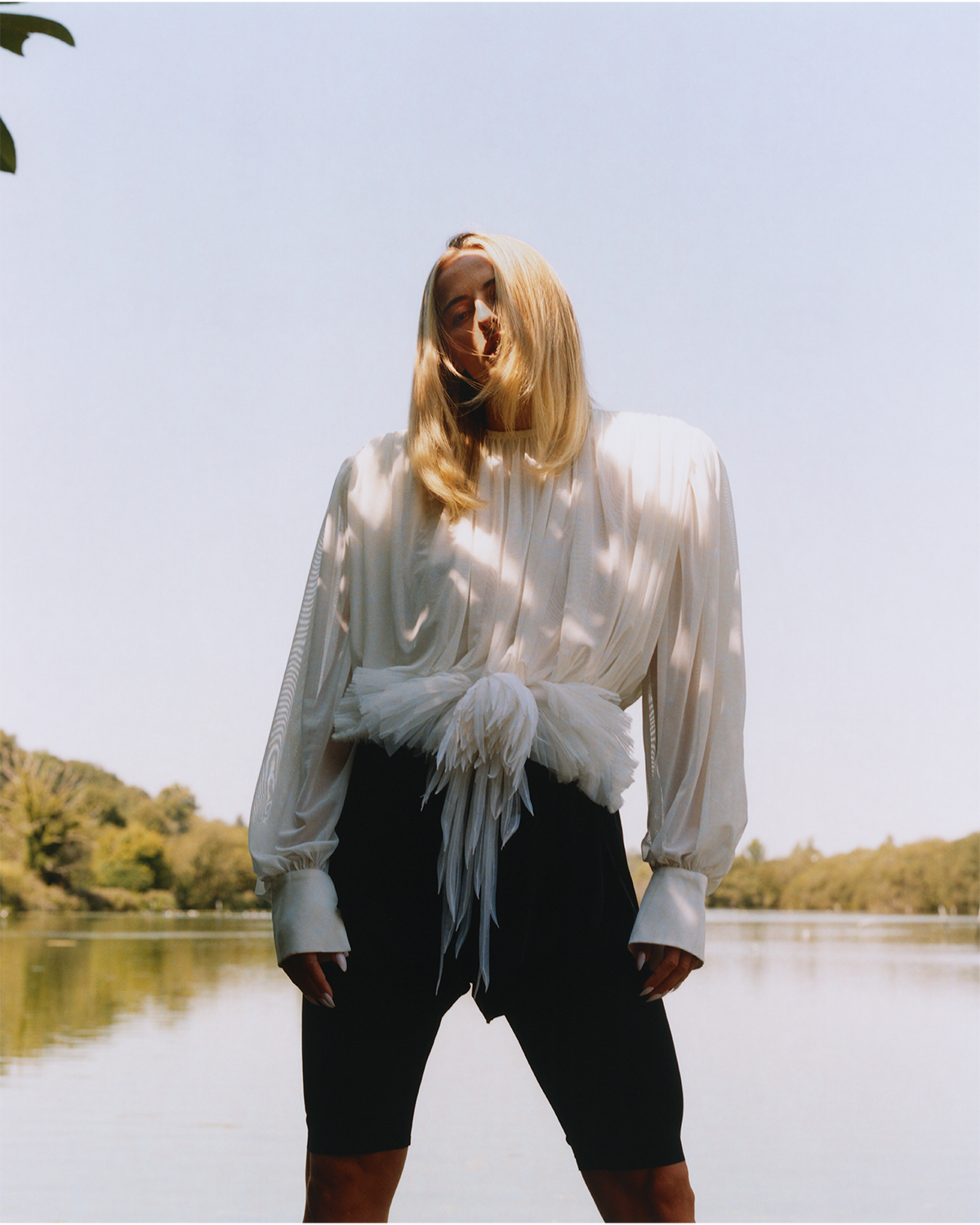
Something that becomes increasingly apparent as we chat is that Kelly—multifaceted, personable, admirably open—is so much more than “just” a footballer. That is, of course, part of her global appeal. Despite fronting campaigns for the likes of Calvin Klein, she remains remarkably down to earth. “I just wanted to be a footballer,” she jokes when I ask her what it’s like seeing her face on billboards.
But being included in global campaigns and getting dressed up for red-carpet events—like the recent Harper’s Bazaar Woman of the Year Awards (where she shared that being there made her feel like “that girl”)—make her realise how far she’s come. “Sometimes when things aren’t going well, and it’s not great on the pitch, it’s like having a little switch off,” she says. “It’s nice to glam up and not always be in football kit. I love switching it up. I love my streetwear, but I love heels and glamming up, too.”
Reflecting on how her style has evolved over the years, she credits curiosity, growing confidence, and her friend and stylist, Karl Willett. “I love learning about fashion,” she enthuses. “My biggest learning has been to not always just look at what’s on the hanger—you have to like how you wear it, and have the confidence to go with it.”
When I ask her how she deals with the pressure of the global stage and her “clutch” reputation, Kelly is collected in her response. “It’s just my job, really, to be the best I can possibly be in that moment. I never take playing for my country for granted—I just want to give it my all.” She also credits her sister, Paris, for keeping her sane. Paris “hates” football, which helps Kelly to switch off. “I value the balance,” she admits.
Kelly smiles as she recounts the family parties they used to host whenever England were playing in a major tournament—they’d wear their football shirts, complete with captains’ armbands—and host neighbours in the back garden, “Vindaloo” playing on the speaker.
“I’m proud to be English, and I’ve always been a proper England fan.” She grins. “Every time I step on the pitch, I remember that young girl and try to envisage what she’d want as a fan. She’d want energy, excitement, and to win—so I play with my heart on my sleeve and try to create energy from within.”
So, what’s next? Kelly would love to see young girls encouraged into the sport in the same way she was. She can see how much the space has shifted, even in the last three years, but thinks there’s still a way to go. “I watched a video the other day of a young girl going over to her coach. She was one of the only girls in the team. She was uncomfortable and felt like, if she made a mistake, it’s because she was a girl. I’d like to see some change there in terms of mindset.”
Progress is happening, she says, but girls are still feeling like they don’t belong in certain fields. “Hopefully, in the future, there will be more space for those girls to feel like they have a place to go.” In Kelly’s opinion, the onus lies with the parents and the boys: together, they have the power to make spaces inclusive. “Seeing both girls and boys with our names on the back of their shirts is a game-changing moment for us,” she explains, “because the boys could be the ones to make sure those girls are accepted in those environments.”
She’s also passionate about evening out the playing field for existing professional female footballers. The resources and support she and her fellow teammates get at Arsenal is second-to-none (the club has a female health coach and an extensive support network of physios, coaches and trainers to support players through their menstrual cycles, pregnancies and breast health). But not every club offers—or is currently able to offer—the same. “It’s amazing to see the game taking steps forward,” she says, “but there’s so much more that can be done.”
There’s also the pressing issue of the gender sporting gap. Kelly notes that at the moment female footballers are “kind of like guinea pigs”, with regard to monitoring and assessing how the female body responds to training and playing at the level they’re at. “There’s just not enough research, because we haven’t been professional for long enough,” she says. “A lot of research is still on men’s bodies—on the pitches that they play on, and the boots that they wear.” All professional female footballers want, she adds, is the funding, research, and support systems to be able to do their jobs in the same way men can.
Kelly is keen to inspire as many youngsters into football as possible, too, especially those that come from backgrounds similar to hers: “I’m proud to be from West London, and proud to represent that area. If I can inspire young girls and boys to see what’s possible… that’s a mark I’d like to leave.”
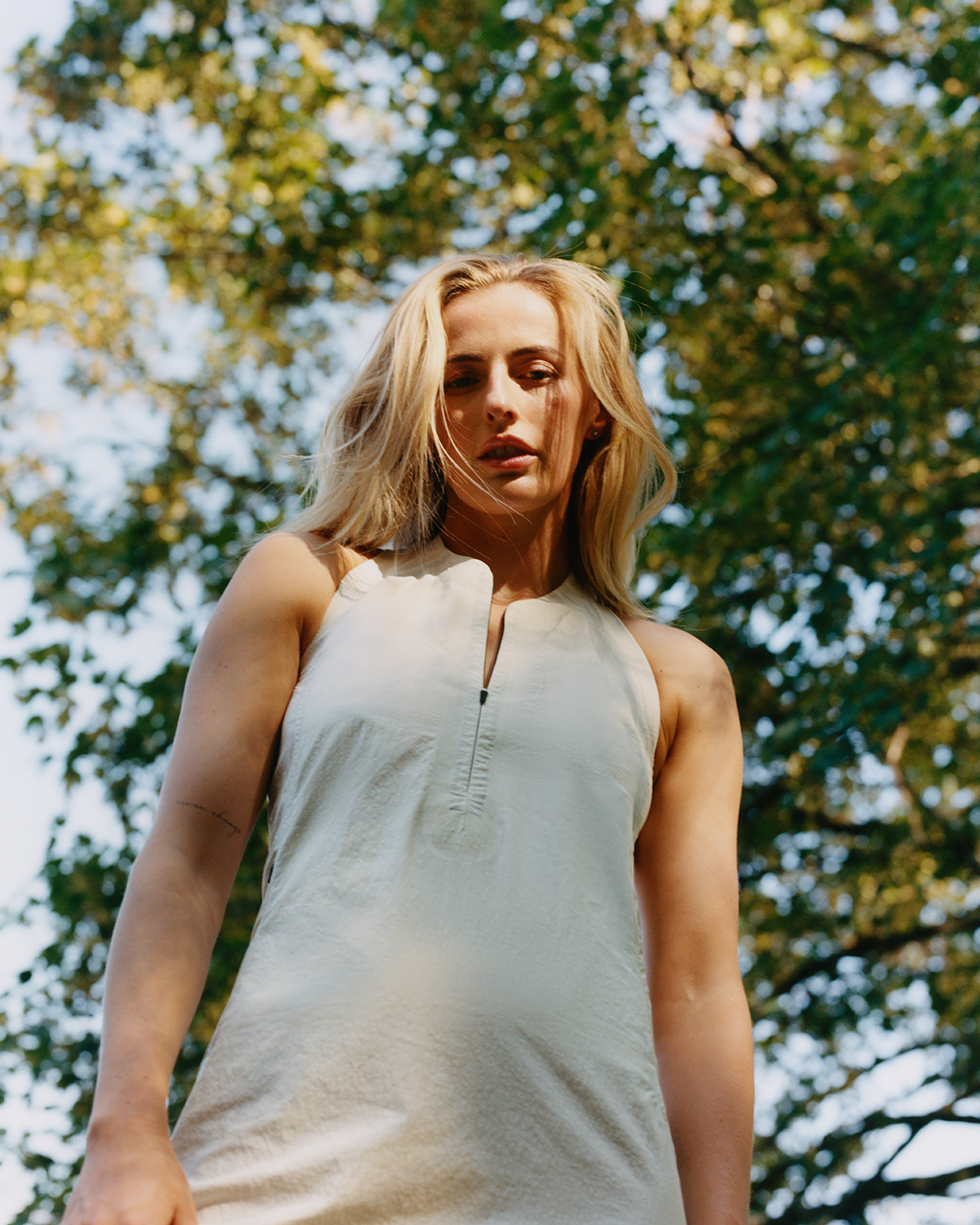
“It’s important to remember where I came from,” she continues. “I’ll never forget that young girl from a council estate. That’s what makes me appreciative of my life now and determined to show young girls that anything is possible.”
One thing’s for sure—she’s not slowing down anytime soon. “I’m really happy with my career so far,” she says, smiling, “but I want to win so much more, too.” There’s no doubt at all in my mind that she will.
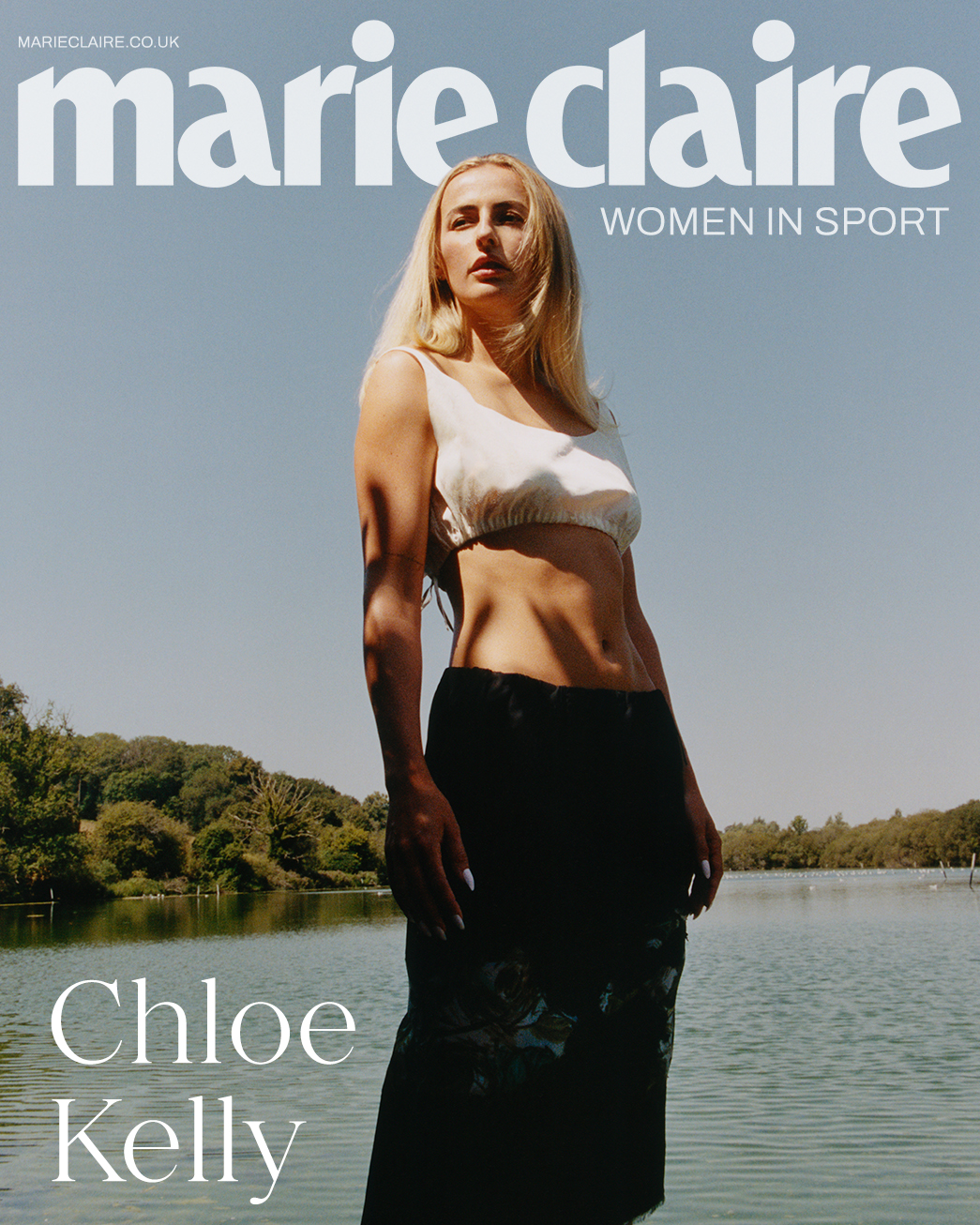
Photographer - Steph Wilson
Stylist - Lyla Cheng
Managing Director - Hannah Almassi
Editor - Ally Head
Makeup Artist - Athena Paginton
Hair Stylist - Narad Kutowaroo
Manicurist - Nichole Williams at Stella Creative Artists using CHANEL Le Vernis in Skieuse and CHANEL La Crème Main
Videographer - Rebecca Munroe
Photography Assistant - Paulina Mytych
Styling Assistant - Marilena Angelides
Production - Town Productions






0 Commentaires